If this was the case then it seems that Harris would have won the race...the vast majority of the media I saw here in the US was going on and on about how Trump was a grave danger to democracy and in general just a terrible person and candidate. In regards to the media, I think this election shows that a large majority of the population simply does not believe them at all.
You don’t watch Fox News or listen to talk radio… it’s a nonstop drumbeat about how Kamala is a communist who will forcibly trans aborted prison babies. And “migrant crime” is up 10000000% and they’re lazy but also taking the jobs.
you're right I don't...but people that listen to that stuff were probably never going to vote for anyone other than Trump (anymore than listeners to MSNBC were going to stray from Harris). My primary sources are relatively centrist sources like WSJ and Economist as well as a variety of independent podcasts and the NYTimes. With a few exceptions on the podcast front all of these outlets were unabashedly anti-trump.
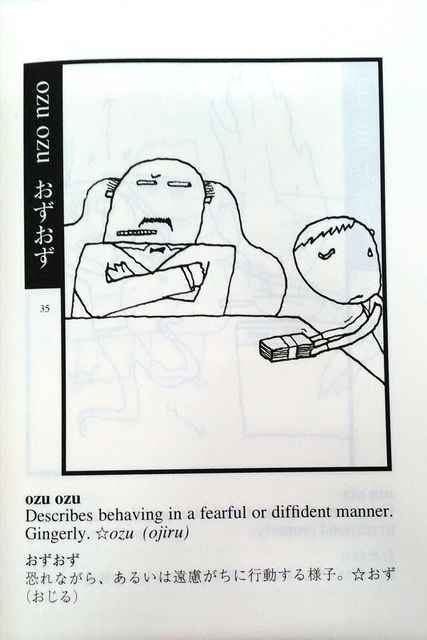
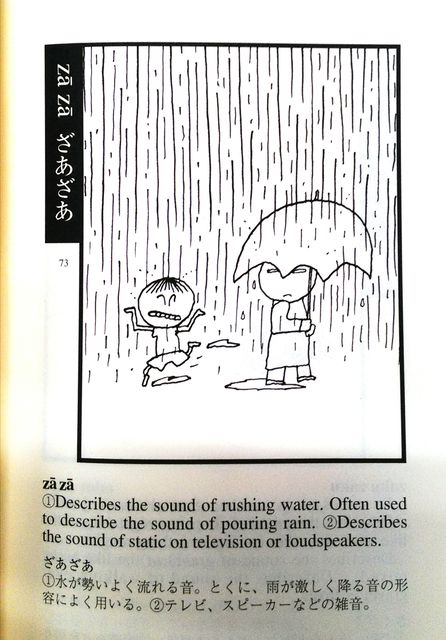
Super interesting article, as a native english speaker who lived in Japan for many years and speak Japanese fluently, he pointed out a lot of things I always took for granted in Japanese (and never recognized as unique). One things I was hoping he would point out, and that I always found extremely unique in Japanese, was the giyongo (basically onomatopoeia). Japanese uses these extensively and the sounds can have extremely sensory driven meanings. They use these giyongo to describe physical textures (tsuru-tsuru is something smooth and slippery), hard to describe souns (pera pera is the sound of speaking a foreign language), flutently), actual sounds (tatata is the sound of fast running), a general feeling (bisho bisho is the sound of being soaked), specific actions (gussuri is the sound of being out cold), even specific emotions (zukizuki is the sound of extreme pain). There are hundreds if not thousands of these and I think they also make the language, as the author describes, 'rich and quirky and different'.
Minor pedantry (sorry!), but it's giongo (擬音語) not giyongo. There's a related term gitaigo (擬態語), both of which fall under the catgeorical giseigo (擬声語). All are generally translated as onomatopoeia in English. The basic distinction is that giongo are used to express sounds made by physical things, both living and inaminate, whereas gitaigo are used to express abstract effects, such as emotional states, energy levels, etc.
I've started to suspect recently that an important secret of being able to sound natural in conversational Japanese is using a LOT of onomatopoeia words. I've considered mining all of them from jmdict and studying them specifically.
That's a great idea. I love them because many of them are evocative of either an actual real sound, or play with some loan word. This makes them easier to remember, plus they don't need any kind of special conjugation.
Abbreviation, repetition, and stacking bits of words together are a big difference between natural vs formal Japanese language skills. It's very Lego-like that way.
For me, the part that is most wild is that I have never heard a Japanese onomatopoeia that sounds remotely close to what I would actually assume the sound to sound like. when I was a little kid and I was studying Japanese, it always made me think that Japanese people had different ears than I did, because if they're hearing all of these sounds the way they are and I'm hearing them all the way I am, there's no possible universe where we are describing them the same way, which would mean that we have to hear them differently. I now realize it's likely more of a societal thing, but it's still interesting nonetheless
There are thousands at least. I recall seeing an entire dictionary of them once in the library at my university.
To this day I still discover new ones that constantly amaze me someone was able to put a sound to it. I think my favorite to date is probably mozomozo. My wife used it to describe a baby flailing it's arms around. I was like ok... What do you mean? She repeated the action of flailing the arms around. I laughed. Oh the Japanese.
I bumped into another English guy who was teaching English in Japan and he made me laugh when he told me that the name of my favourite conveyor sushi restaurant in London - Kulu Kulu - meant "round and round". Sounds like it might be similar to these phrases.
Japanese isn't generally considered to have the equivalent of the 'l' sound from most other languages, and it rather has a sound that's perhaps somewhere between 'l' and a rolling 'r'. In romanized text it's generally written as 'r'. Transliteration isn't really unambiguous in the end, though, and there are multiple ways of romanizing Japanese, so while romanizing くるくる as 'kulukulu' doesn't sound like a very common transliteration, it may be possible.
Also, 'kuru' means 'to come', but I don't know if that's related.
I think there are different onomatopoeia for different kinds of pain. English equivalent is probably when a doctor may ask if a pain is sharp, dull, pulsating, burning, etc.
Careful... it's a little too easy to ascribe things like that to a superficial cultural trait.
English has a huge variety of terms for extreme tiredness: whacked, bushed, wiped out, worn out, drained, burned out, beat, knackered, fried, shattered, frazzled, zonked... must be the puritan work ethic or something.
We've even got a few onomatopoeia of our own: feeling kinda.. ugh.. meh... bleugh... I mean, whew, yeesh. Just... phew.
Maybe being tired is just the global human condition.
I read a lot of manga and they often have a lot of hyper specific sound effects. I don't speak Japanese but always found this interesting. I guess this explains it. Thank you.
If that’s the case, it seems like a very bigcorp-centered perspective. Indie devs and people who aren’t already well-connected don’t have the ability or resources to get consortiums of companies behind their projects or create open source foundations.
So I don’t know—maybe it wasn’t intended this way, but it comes across as very gatekeep-y to me. Like telling people that unless they are already established and famous enough to start a project that has tons of backing from the start, that they can’t “really” be opensource (despite a very real opensource license), meaning you as the little guy should either build your project for free with no hope of ever making a living from it, or else be excluded from the broader opensource community.
This article is dramatically simplifying the state of software markets.
>Single vendor isn’t a reasonable way to do Open Source and resist evil proprietary software. It’s just another way to do proprietary software.
>proprietary software is not evil. It’s just inferior.
Based on these statements the author would have you believe there is no value in commercial/proprietary software and we should just never develop it. All software should be open and collaborative. That is obviously silly. While open source software is great, many incredible software innovations and truly valuable software comes from proprietary companies. In fact, these companies are typically the ones that make the large open source ecosystem possible by making massive donations in developer hours as well as cash to orgs like linux foundation.
The interesting discussion is in whether commercial software should be closed source or source available with restrictions. The days of building propriety, VC backed infrastructure software with a traditional permissible license are over and likely never coming back.
> The interesting discussion is in whether commercial software should be closed source or source available with restrictions.
Thank you!
The author carefully uses the term "proprietary software", drawing no distinction between whether it is closed source or source available, as if that distinction is totally beside the point. But for me, as someone who makes software, there is a huge distinction between those two things!
I really hate using tools that I can't read the source of. Just recently I traced some documentation on how python garbage collection works into the implementation for that particular thing in the particular version of the language that I'm using. If python were a single-vendor source-available tool, that would be a bummer and I'd be less likely to use it, but it wouldn't actually affect my work much. But if it were closed source, that would absolutely be a deal breaker for me. I need to be able to go look and see how my tools work, otherwise I'm blind.
I do agree with the author that community-driven open source is better, and I consider projects like the Linux Foundation, BSD, GNU, Apache, CNCF, etc. to be wonderful miraculous gifts. But I also worry that a distressing proportion of the most important software I use has been built on the backs of a series of absurdly under-compensated and eventually burnt-out passionate nerds, and I can't stand that. So I'm sympathetic to a model that has a more obvious (to me) path to creating software tooling that I can use without flying blind, while compensating people adequately for their work.
>> proprietary software is not evil. It’s just inferior.
> Based on these statements the author would have you believe there is no value in commercial/proprietary software and we should just never develop it.
Do you believe that there is no value in inferior products and that they should never be developed?
I certainly don't, and it's clear to me that the Carrez does not, either.
If I have the option, and can afford to do so, I will select the superior product. But if there is no option, or I cannot afford the superior product, I will accept the inferior one and be better off than if I had no product at all.
She says that she was doing a 3 month "ramp" - which I can assume is the induction period. She'd only got out of the ramp and started "proper" at the beginning of December, which is what (I think) you heard
My grandfather was an academic who studied 'socially alienated adolescents' and was the original director of this program when it was developed back in the 60's. This is one of his original lectures on the social dynamics that drove the program: https://www.youtube.com/watch?v=aPwV8miW46I&ab_channel=Natio...
this is definitely not true of SF...its very obvious for anyone walking around when you are in a good or bad part (parts of SOMA/Tenderloin/Civic Center/Western Addition). Most other parts of the, including where this crime happened, feel completely safe (and statistically are very safe).
It really depends on the type of application but a common one is getting a large spike in traffic beyond the norm (front page on HN, flash sale, etc.) I do think #1 and #2 that you mentioned are more common constraints and are ones that also both addressed in Dragonfly (much more efficient memory utilization and ability to scale vertically which negates the need for complex orchestration)