I agree with you from a mathematical point of view. You have this "dead economy theory"[0]. I spent a lot of time trying to model this theory, enhance the theory (lot of good HN comments) and find a "middle ground" path. My saying is that you end-up on an optimization saddle point where it is really hard to not fall into concentration of power. I was able to get radical abundance only at the cost of pretty hard regulations.
I agree there are some extremely bad outcomes from fast labor replacement.
I don’t think it’s inevitable that the economy collapses though. The problem is that this model assumes that capital needs labor, but soon it may not.
The easiest model is - assume we get robot laborers in the next few years. The AI firms that are displacing humans still need services, most of these will be purchased from other AI/robot firms, and so while prices will swing around dramatically, there is no reason the engine has to stop. (Depending on what the AIs want; you can assume that more compute and robots will be part of it.)
I do agree that unbridled capitalism is mostly incompatible with human flourishing in this world and in any event you’ll see a lot more regulation; made feasible by how good AIs are at navigating huge Byzantine rulebooks. I view the techno-feudalist capitalist endgame as fairly unstable due to consolidation pressures, though I guess once we have nuclear-armed megacorps they might use MAD to prevent further mergers.
I spent more than one week, as a side project, to add an MCP server to my Cheméo website. Only 4 tools.
It took me way more time than expected, I was thinking: "Just wrap the REST API, 2h, done".
The MCP payload has nothing to do with the REST API one. Because you need to make it interpretable and context efficient even so it is structured data.
It was really interesting work and I suppose very little people are taking the time to rethink what is sent over the wire while creating a MCP server. If so, we would not have MCPs with the minimal payload being 500kB of JSON soup.
If you send my MCP through your "save token filter", I can guarantee you, that you will have trash down the line.
Yeah this is why a code execution sandbox so the ai can batch calls and select from the response format what it wants and limit the number of responses with instruction to be concise and preserve its context is a really cool thing to do.
Where I live, we have a small park, 500m away. You need to walk through it if you want to get to the city center from the small neighborhood we live in. To protect the wildlife, the lighting system has presence sensors, so as you walk or bicycle through the park, the way/street lighting turns on, you can walk, and just after you, it turns dark again. Really cool, especially the first time I went through it in the middle of the night.
Those things drive me nuts. There is a walking path that I frequent, and I can't use it at night because they are spaced every 20-30 feet. When I am not under them, they are off and my eyes adjust to the darkness and as I pass under one it flips to full daytime brightness and blinds me. As soon as I walk away from it, everything goes dark again, but my eyes had adjusted to the daytime brightness of the lamps. And I know that in 30 feet, I have to do it again, for the next couple of miles.
unfortunately they never are. Brightness-adjusted, that is. Everyone installing lighting fixtures these days believes they must be daylight-level bright. The only ghosts you see are afterimages if you happen to look straight at the streetlamp ...
(I find it odd; dark-adapted eyes see a lot, including movement in shadows or low-contrast obstacles - after all, our bodies know how to see well at moonlight levels of illumination. Why are we so keen to kill this ability?)
What? When sunset is at 5pm you want to lock the elderly up in their homes? What about those that have trouble sleeping, like many do? Or those that wake up before sunrise?
This is the kind of thinking that leads to totally inaccessible cities.
If you want to go for a walk in the park in the middle of the night and can't see without a light, BRING A FLASHLIGHT. That's just basic safety. You never know when a power outage will strike. If you are 100% dependent on artificial light, the safest thing to do is bring your own.
If it gets used a good bit, I wonder if the on/off cycles are even more impactful to the local wildlife than constant but more optimized lighting was in place.
I know if I was trying to sleep a constant source of light is easier to get used to than a randomly flashing source of light. And for nocturnal animals I'd imagine randomly losing the cover of darkness from time to time is probably a lot more stressful than just avoiding the brighter areas.
I'd be interested in seeing data. I really wonder which is better.
Wouldn't it be more reasonable to just expect people who want to walk places in the dead of night to wear a headlamp? They're cheap, easy to recharge, and can be adjusted for various brightness levels.
The problem is not just with people who want to walk places, but people who want to mug/murder/rape those that do.
As an example, in the UK, councils are expected to light commonly-traveled paths, both so path users can see where they're going, and to reduce crime. Unlit paths in city parks are still traversed, and are often a haven for crime.
"Dead of night" isn't the right image. 5PM in winter with clouds (as is typical in the UK) has roughly the same level of natural light as 2AM. People are still coming home from work in conditions where natural light is low enough to lead to accidents and crime.
I hesitate to even engage in a conversation about organizing our entire infrastructure/society over such a rare incident, but I'll bite.
Powerful lights are known to actually increase safety risks. Our nightvision is reduced and the shadows of the lights are the most dangerous parts. Perhaps more dangerous than no light at all.
Once city (I can't recall which) had a really cool solution to this where they installed string lights. Lots of small, dim lights don't negatively impact your nightvision, keep the path pretty visible, and don't cause too much light pollution
TFA claims that lights don’t reduce crime, but I‘d like to see the exact meaning of that statistic (eg dark places are less frequented hence less crime?).
TFA doesn't even claim that. TFA links to an advocacy website trying to convince authorities to put out less light pollution. It claims improved lighting (presumably brighter) doesn't reduce crime, and it claims a reduction (but not elimination) of lighting doesn't increase crime.
I would say that going from no lighting at all, to some lighting, on urban paths, improves safety (not tripping over unexpected obstacles) and reduces crime (presuming there was any crime while it was unlit). The article doesn't refute that. I would suggest that if a major city decided to eliminate all street lighting, it would be absolute chaos.
Nobody is trying to remove all street lighting. There are plenty of practical suggestions on here and in that document about how things can be improved without reducing safety.
> The problem is not just with people who want to walk places, but people who want to mug/murder/rape those that do.
This is a completely irrational (though commonplace) fear. Criminals aren’t hiding out in bushes in desolate parks to mug or rape random people. Muggings most commonly happen in side paths off of busy high streets because criminals, being people, like to hang out in stimulating places where they won’t get bored. They’re not going to be donning ghillie suits and lying patiently in wait for however long in uncomfortable brush for a hapless victim to cross their path. The muggings are crimes of opportunity. Rapists are most commonly somewhat trusted friends or acquaintances who have access to people when they’re in vulnerable states in private, protected spots.
Thinking parks and parking lots need to be lit up like Christmas to deter crime is just a veneer of rationalization to cope with the standard childhood fear of the dark. It is not backed by data or evidence. The actual main public safety concerns when it’s dark out are trip-and-fall hazards or collisions with or vehicles who can’t react fast enough when things pop out at them, not muggers and rapists. Having the nighttime environment overly lit actually makes shadows starker and blows out people’s night-vision so they can’t find things. If anything, it makes the edge case where Sam Fischer is hiding in the bushes more dangerous rather than less.
To add a small datapoint in support of the above: I happen to spend many nights in rural areas. Some with towns & nearest neighbours far enough away that nights are truly dark.
Those nights are the safest in my experience. Simply because no thief or mugger would bother to venture out into the middle of nowhere, in the off-chance there's something to be had there. That's assuming they'd even know someone/something to be there! And even if they would, chances are I'd be quickly aware of their presence, or some geese/other birds would announce their presence.
TLDR; Be careful in areas with lots of people, or on the edge of such areas. Places that lack people tend to be safe.
Criminals hide out in the dark parts of urban parks, mere minutes away from well-lit, more populated areas of the city. They're not going to get bored. Victims walk through the parks and get jumped, occasionally dragged off into the darker parts.
A park between the university and student accomodation. Very popular with students going home at night. Apart from a few lit paths, entirely dark. Most paths are lined with trees, like so: https://www.edinburghnews.scotsman.com/webimg/b25lY21zOjAxYz...
Here's a small sample of incidents. There are genuinely criminals who hang about in the dark parts of this park, late at night, in order to attack victims. They don't have to wear ghille suits, they need only stand behind the trees.
- 2011: https://www.bbc.co.uk/news/uk-scotland-edinburgh-east-fife-1... "Two men who grabbed a young woman before one sexually assaulted her in an Edinburgh park are being sought by police. The 19-year-old woman was walking through the Meadows at 03:30 on Tuesday when she was attacked at a spot north of Melville Drive."
- 2012: https://www.bbc.co.uk/news/uk-scotland-edinburgh-east-fife-2... "The 30-year-old was walking through Middle Meadow Walk at about 22:30 when two men approached him. One of the men punched the victim in the face, knocked him to the ground and continued assaulting him before taking his personal belongings."
- 2014: https://www.bbc.co.uk/news/uk-scotland-edinburgh-east-fife-2... "The 25-year-old was walking near the tennis courts at the east end of the park at about 04:30 on Saturday when he was approached by two men. After asking the man for money, the two attackers punched him several times, causing minor facial injuries, and also tried to steal his watch."
- 2014: https://www.bbc.co.uk/news/uk-scotland-edinburgh-east-fife-3... "Steven Davidson, 24, attacked the 19-year old as she made her way home through the Meadows in November 2014. [...] Davidson ran up and grabbed her from behind. [...] The woman had been making her way home just before 07:00 [...] she passed out and came round to find him lying on top of her. He then raped her."
- 2016: https://archive.news.stv.tv/east-central/1374940-three-assau... "Police are investigating after three assaults were carried out on the Meadows in Edinburgh within 15 minutes of each other. In each of the incidents, which took place between 3.10am and 3.25am on Sunday, the attackers robbed or attempted to rob the victims of cash or possessions."
I'm not saying we should floodlight the park. What has helped most is regular police patrols of the park. But I'd be lying if I said the criminals don't hang out in the dark parts of this park, waiting for victims. They do.
I vaguely remember that studies showed that lack of streetlights does not create crime, but the crime that happens anyways prefers badly lit areas. But from a pedestrian's perspective that's not much relief, you'd still avoid those areas. Which is not what a city planner has in mind for a park
Also part of the issue is that lighting at night creates enormous contrast between dark areas. Even darkness is something our eyes are well-adapted to, and we can see surprisingly well with even a little moonlight. We struggle with alternating bright/dark areas.
No. Unless you expect everyone to always have those things you will need the street lights anyway so why not make them smart and efficient. This especially applies in northern latitudes where it is dark in the evening even before people leave work.
I would consider that ideal, but there would always be the fear of a potential negligence lawsuit if someone got hurt or crimed, so the government considers them necessary.
I love to model and simulate. As the dead economy theory[0] (discussion [1]) was submitted here, I decided to simulate it. It was really hard to figure out a path "good for the humanity", in the sense of a balanced system, not a winner take all situation, etc.
I think this is the reason why you have the tendency to propose some freeze-all policies, full control or similar. If you want to find the equilibrium, you need to accept that it will be a controlled equilibrium, most likely on a saddle point, with underlying process changing all the time, requiring fast changes in regulations. Our democratic systems, laws, etc. are not built to do that, they are built on the idea of intrinsic stability of our world where incremental improvements do not need cutting through what was decided before.
One counterpoint is that the "labor as TAM" argument is far larger than it needs to be. Only a fraction of it needs to be captured to justify all the capex and make 5 new companies displace FAANG, and this does not have to translate to unemployment to succeed.
The difference in the unemployment vs efficient employment model is mostly user driven adoption vs company mandated adoption, or centaurs vs reverse centaurs.
> Our democratic systems, laws, etc. are not built to do that, they are built on the idea of intrinsic stability of our world where incremental improvements do not need cutting through what was decided before.
Without totally derailing the thread, this is also obviously why climate and biosphere collapse is not (and likely will continue not) to be addressed, e.g. Timothy Morton's Hyperobjects
Proof of work, even "custom", where the user does not need a particular interaction with the page, does not work. The scrapers are running headless Chrome and solving the work. They do not care, they do not pay the bill, the compromised system's owner pays the bill.
I have such system for the registration form on one of my website to prevent the double validation of emails to be used to spam emails of victims. The PoW challenge prevents less than 10% of the bots.
You know what? I cannot care less if people are not reading blogs anymore. I reactivated my blog because it is a lot of fun to write, a lot of fun to take the time to put down my ideas, try to correctly formulate them, fighting with my crappy English or German (and the loss of my French).
So, you can move on, you can go fully away from the blogosphere (it was a word, 20 years ago), this will not change that I am happy writing my ideas/thoughts down, for me.
I think it is very good and healthy to not care too much about readership numbers, but you seem pretty high on your pedestal here - you still publish it to the public, you still seek an audience. If you’re doing it just for you, then why are you hosting a blog For the world to see? Surely there is some part of you that wants people to read it, otherwise you wouldn’t, right?
Just knowing that people could read my blog is forcing me to take better care of my writing. This is the most important reason. And only my friends and family know the address, it is not indexed :-D
Yes, but this is not the one where I wrote about politics, life and society... still, the writing style is not that different, so, I suppose an AI system would be able to easily associate my crappy personal blog to me (not sure if they are respecting the noindex stuff the way Google does) and build a profile of my personality out of it.
Note: Interestingly, seeing my full name here is not something I expected.
I apologise for this, the real terrifying thing that it took me 1 minute and one shot prompt on Grok to get all this – and a lot more. Just check yourself. We all are heavily royally f...d, my firend. (I found similar level of details about myself too)
Dunno man, sometimes I blog stuff I want to remember (how to do task X or Y, some arcane ffmpeg incantation, recipes, etc) and when I need it, it’s easier to find it in my public blog which is accessible from anywhere, vs. it being a file buried in some computer I have to sit in front of, or somewhere in a shared drive I have to authenticate to, etc.
For some things there is value in them being publicly accessible even if nobody but me cares or uses them.
I have a wiki for that, but I keep reading the Arbiters of the Internet around here claim wikis are even deader than personal blogs, so what do I know. :-)
It's on a public IP, but isn't open to public users. I don't personally think 'the place I scribble stuff I want to remember down the road' is a blog, but I'm equally uninterested in arguing a distinction I don't think much matters. I don't know what you mean by 'extra step' unless you mean 'loging in', which is a hurdle I assume I'd have to jump over if I was posting a blog entry.
I think this isn't quite the right example - a pocket calculator does not need you to verify its output. It is better to be able to calculate, but if you can't seems much less a issue then using a AI without being able to do whatever you asked of it
(So I fully agree with your point, but I think your example is not strong enough)
Yes, that’s where we are today. Colleges definitely can’t avoid fundamentals right now. But at the same time, they should be skating ahead of the puck. Once the calculator has been invented—-even when it’s rare and awkward—-they begin easing off the slide rule reps.
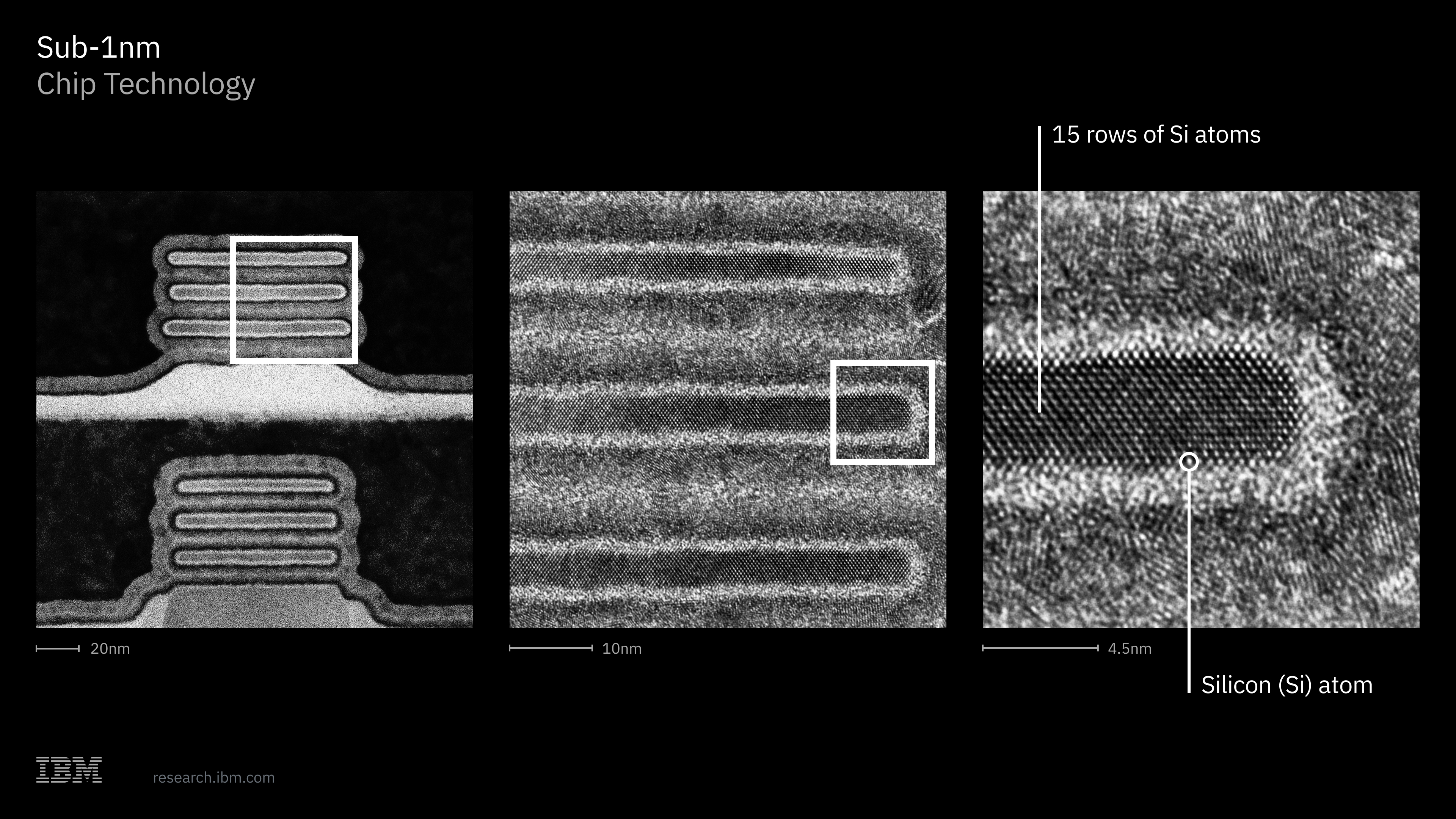
I am just astonished at the quality of the structure. Not only that, but the quality of the "cut" to then be able to take this picture. I was closely involved in EM imaging more than 30 years ago, this is just wonderful to see such pictures now.


reply